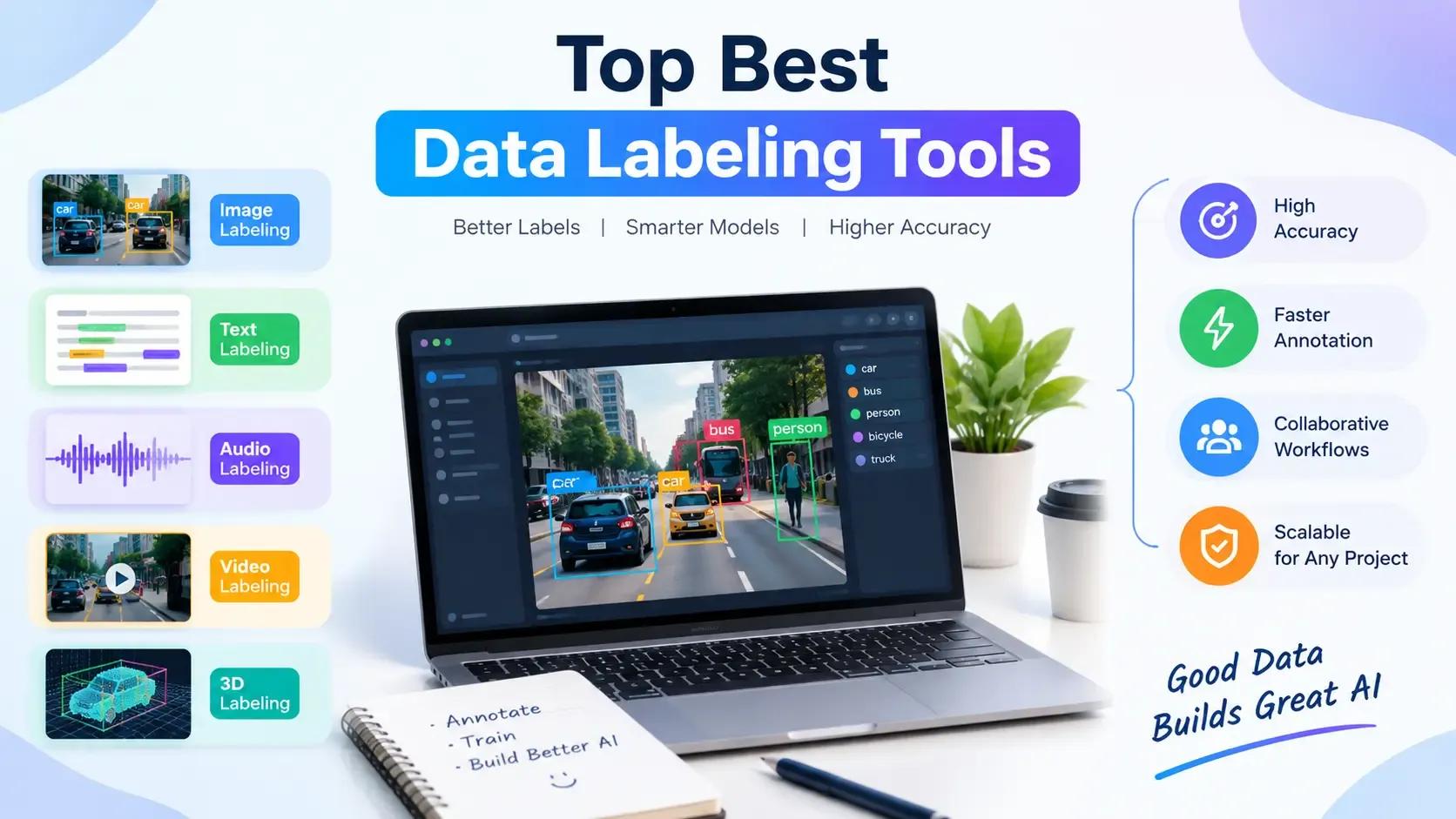
Choosing the right data labeling tool can make a major difference in the quality and speed of an AI project. Data labeling tools help teams turn raw images, videos, text, audio, and other data into structured datasets that machine learning models can learn from.
Not all tools will work for every project, however. Some are designed primarily for computer vision, others for NLP, for medical imaging, for 3D data, and for large enterprise workflows.
This guide features the 20 top data labeling tools for 2026, along with open-source options, enterprise solutions, and AI-specific tools. We explain what each tool does, its main features, and the type of team it may suit best. We also cover how to compare data annotation tools and when using a professional data labeling service may make more sense than managing everything in-house.
What Is Data Labeling, and Why Does the Right Tool Matter?
Labeling data involves giving raw information a meaningful label that can be understood and learned by an AI or machine learning model.
For instance, the computer vision team can extract bounding boxes of cars and pedestrians from images while developing a computer vision model. Labels may be attached to customer messages by an NLP team, either by intent or by sentiment. For medical AI projects, specialists can be needed to label structures within CT or MRI scans.
These labels are important because the quality of the training data depends on the quality of these labels. Having a quality data labelling tool with user-friendly interfaces, automation, collaboration, review workflows, and quality checks can simplify the process.
The right tool can help teams:
Label data faster
Maintain consistent annotation standards
Reduce repetitive manual work
Add AI-assisted labeling
Review and correct annotations
Manage large datasets
Export data in formats needed for model training
It's not quite the end of the process, though. Good quality assurance and trained annotators are also key for producing reliable datasets.
How We Selected These Data Labeling Tools
We selected these tools based on the features that matter most when building and managing labeled datasets.
Our comparison considers:
• The data types: image, video, text, audio, documents, 3D, LiDAR, and others.
• Bounding boxes: segmentation, classification, transcription, key points, named entity recognition, and more.
• AI assistance: automated labeling, model-assisted annotation, and pre-labeling
• Quality control: review workflows, consensus, validation, and QA tools
• Collaboration: team management, roles, task assignment, and workflow controls
• Scalability: suitability for small projects and large datasets
• Security: access controls, enterprise security, and deployment options
• Ease of use: ease of creating and managing annotation projects by teams
• Pricing and deployment: open-source, cloud-based, enterprise, or managed
In addition to software platforms, the list also includes broader data-labeling solutions, as AI teams may require more than just an annotation interface.
Top 20 Best Data Labeling Tools in 2026
1. SuperAnnotate
SuperAnnotate is an AI data platform to build and control quality training datasets. It handles multimodal data and has annotations, quality control, and AI-assisted workflows.
Key features:
Image, video, text, audio, and LiDAR support
AI-assisted labeling
Quality control and workflow management
Best for: Enterprise and multimodal AI teams.
2. Labelbox
Labelbox helps teams create, manage, and review labeled datasets for machine learning. It combines annotation, collaboration, quality management, and model-assisted labeling.
Key features:
Multiple data types
Model-assisted labeling
Team collaboration and QA
Best for: Enterprise AI and machine learning teams.
3. CVAT
CVAT, or Computer Vision Annotation Tool, is an open-source tool that specializes in image and video annotation. It can be self-hosted, and it is able to support common computer vision tasks.
Key features:
Image and video annotation
The ability to detect an object and segment it in images.
Open-source and self-hosted
Best for: Computer vision research, software development, and computer programming.
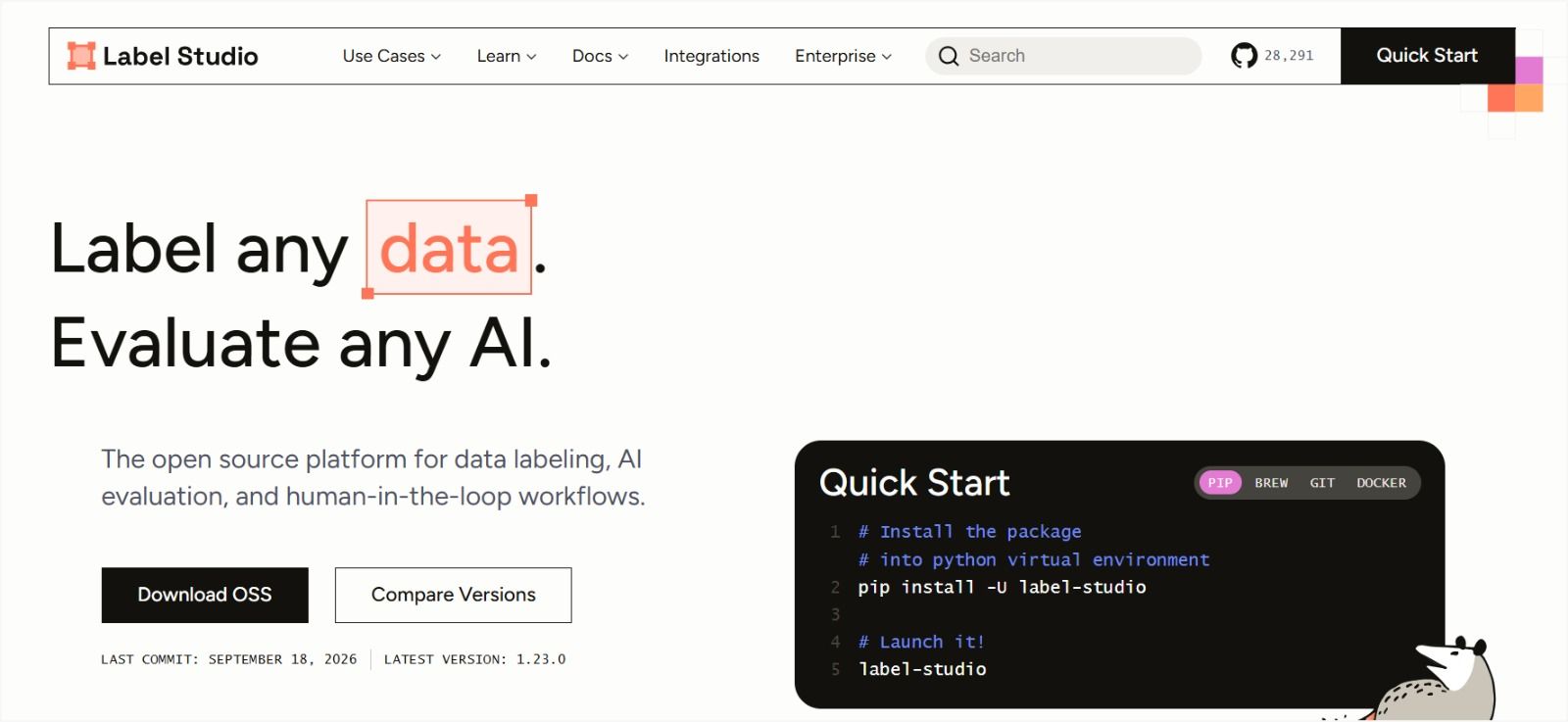
4. Label Studio
Label Studio is an open-source data labeling platform that can process various types of data. It has flexible interfaces that enable teams to develop end-to-end annotation workflows.
Key features:
The school will include images, text, audio, and video on the website.
Custom labeling interfaces
Human-in-the-loop workflows
Best for: developers and research teams.
5. V7 Darwin
V7 Darwin is a data annotation platform designed for computer vision and specialized AI workflows. It provides annotation, automation, and dataset management features.

Key features:
Image and video annotation
Automated labeling
Dataset management
Best for: Computer vision and medical AI projects.
6. Encord
Encord is the integration of data annotation, data curation, quality management, and model evaluation. Supports multiple data types and AI-assisted labeling.
Key features:
Multimodal annotation
AI-assisted labeling
Quality and evaluation workflows
Best for: Enterprise and multimodal AI teams.
7. Scale AI
Scale AI provides large-scale training data and annotation solutions for AI companies. It combines technology with human-reviewed data operations.

Key features:
Large-scale data labeling
Image, video, text, and audio
Human-in-the-loop workflows
Best for: Large AI companies and enterprise projects.
8. Appen
Appen provides AI training data and annotation services across multiple data types and languages. Its solutions combine annotation technology with a large human workforce.

Key features:
Image, text, audio, and video
Multilingual data
Large-scale annotation services
Best for: Global AI and enterprise projects.
9. Sama
Sama Source provides data annotation and validation solutions with human expertise and quality management. It focuses on producing reliable training data at scale.
Key features:
Image and video annotation
Human-in-the-loop QA
Data validation
Best for: Enterprise AI and computer vision projects.
10. Dataloop
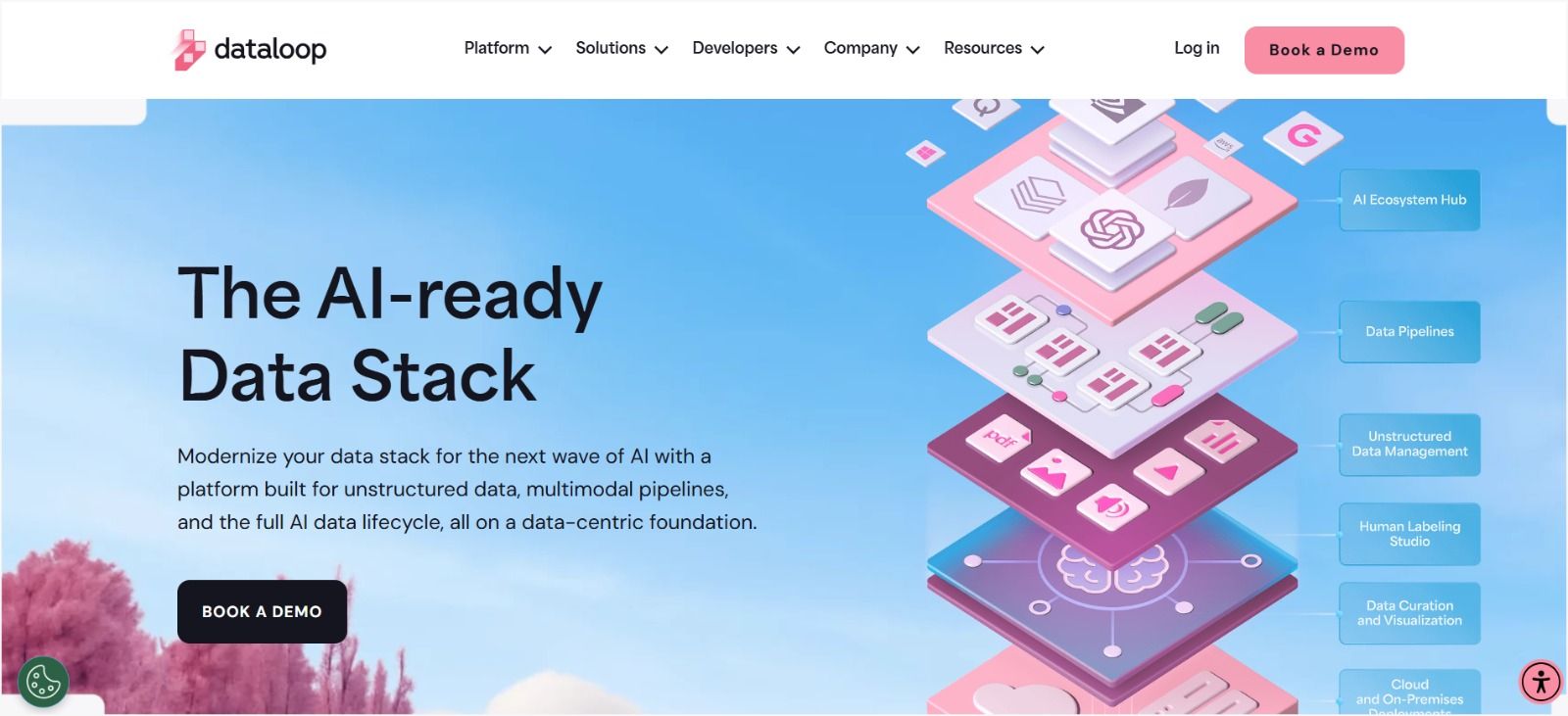
Dataloop unifies data management, data annotation, automation, and AI workflows. It's meant for groups handling huge and intricate data sets.
Key features:
Data annotation and control.
AI-assisted workflows
Use automation and quality control. Utilize automation and quality control.
Best for: Enterprise AI and big data.
11. Segments
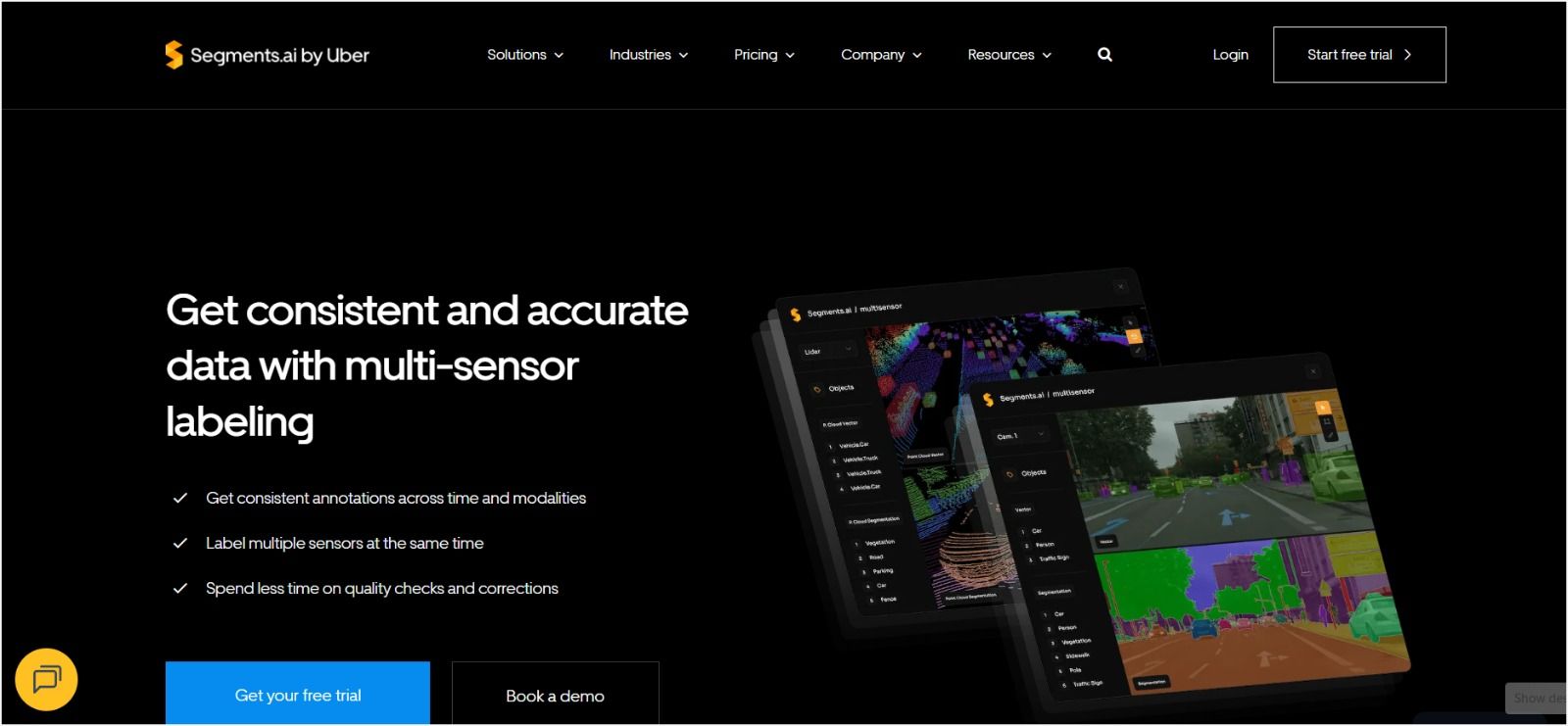
Segments specializes in labeling 3D and multi-sensor data for robotics and autonomous systems. It supports synchronized 2D and 3D annotation.
Key features:
3D and LiDAR annotation
Multi-sensor labeling
Object tracking
Best for: Robotics and autonomous vehicle projects.
12. Supervisely
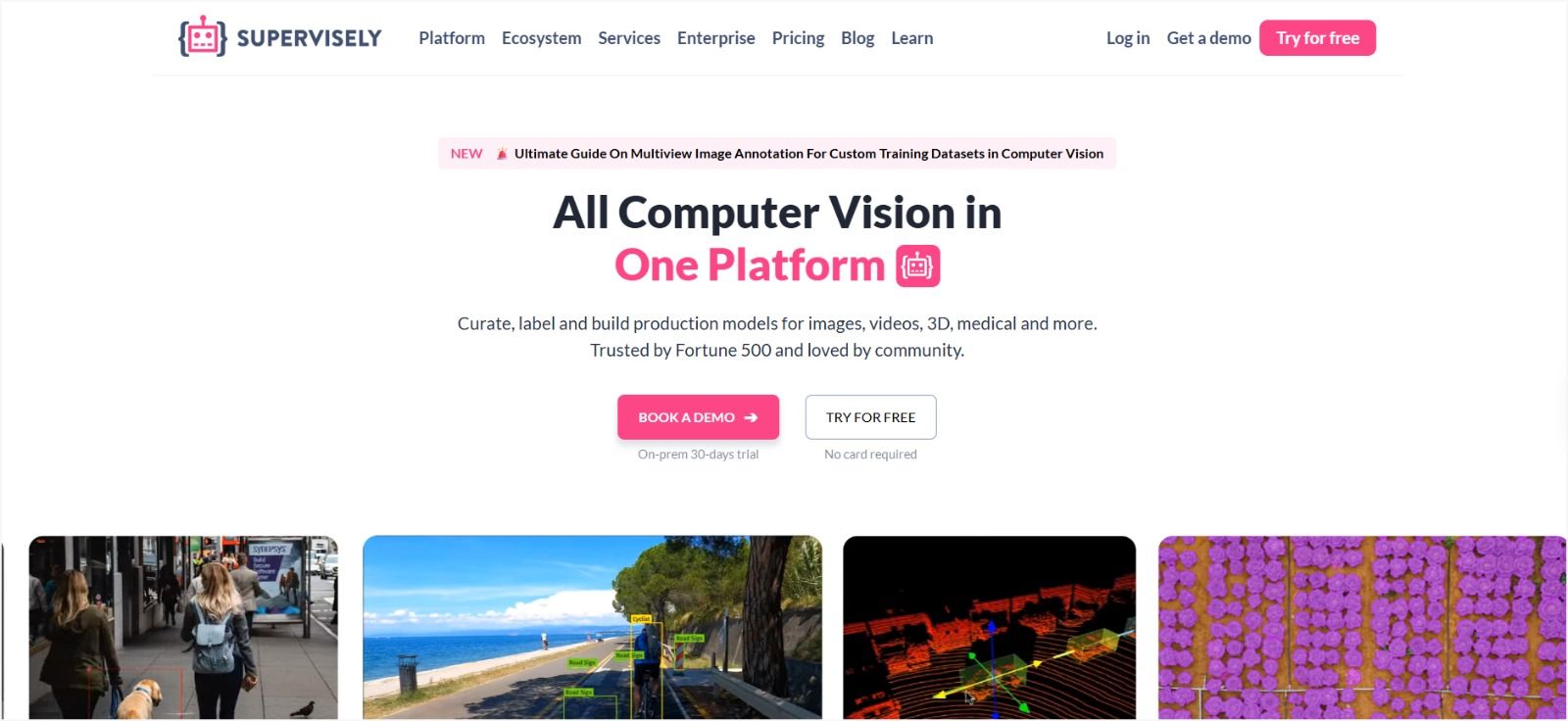
Supervisely is a computer vision platform that combines annotation, dataset management, model training, and evaluation.
Key features:
Image, video, and 3D annotation
Medical imaging support
AI-assisted labeling
Best for: Computer vision, medical AI, and research teams.
13. Kili Technology
Kili Technology helps organizations create and manage high-quality training datasets. It supports different data types and provides tools for annotation, collaboration, and quality control.
Key features:
Image, video, text, and document labeling
AI-assisted annotation
Quality management
Best for: Enterprise and regulated AI projects.
14. Amazon SageMaker Ground Truth
Amazon SageMaker Ground Truth provides data labeling workflows within the AWS ecosystem. It supports several annotation tasks and human-in-the-loop workflows.
Key features:
Image, text, and video labeling
Automated labeling
AWS integration
Best for: Existing AWS customers using Ground Truth.
Note: AWS currently states that Ground Truth is no longer open to new customers and does not plan to add new features.
15. Roboflow
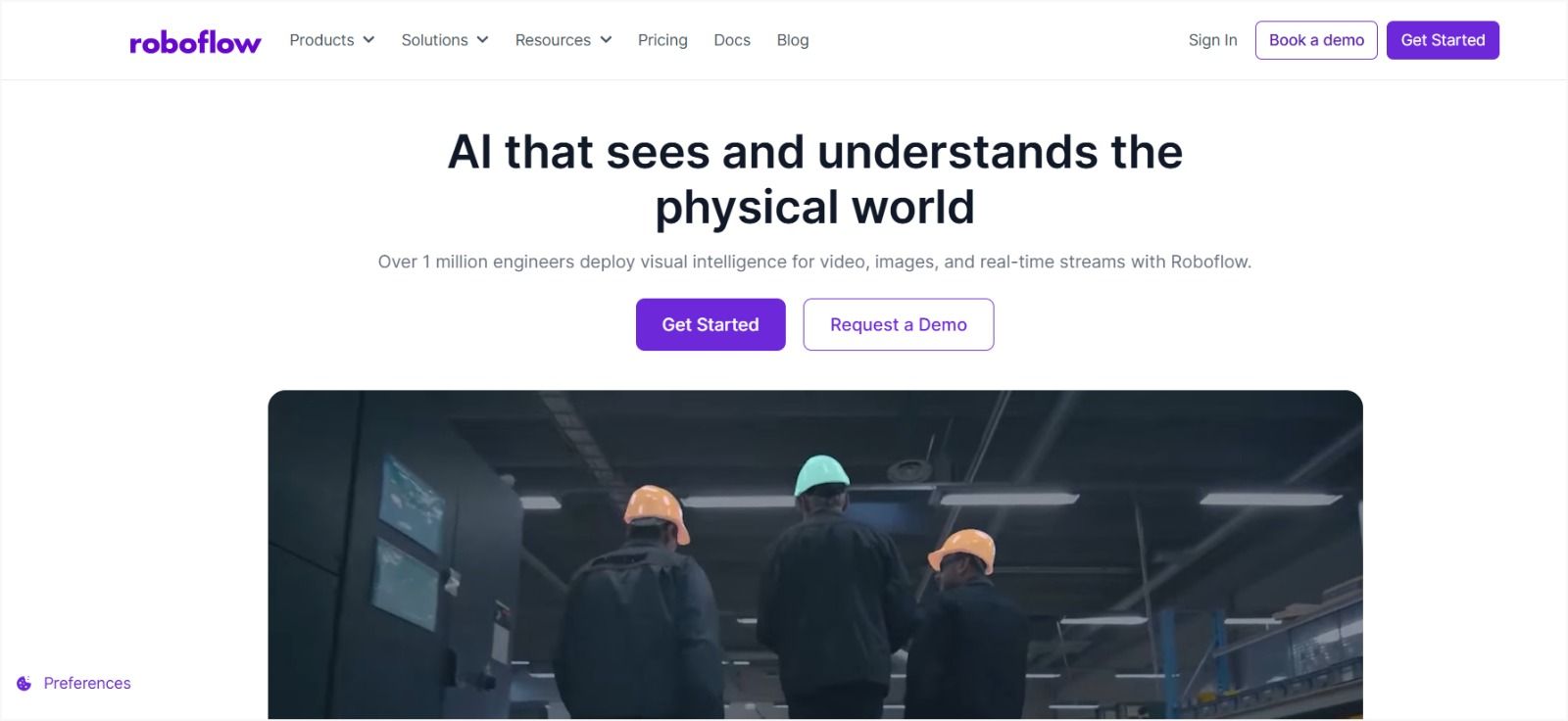
Roboflow provides tools for building computer vision datasets and training models. Its annotation features include AI-assisted labeling to reduce manual work.
Key features:
Image annotation
AI-assisted labeling
Dataset management
Best for: Computer vision developers, startups, and researchers.
16. Prodigy
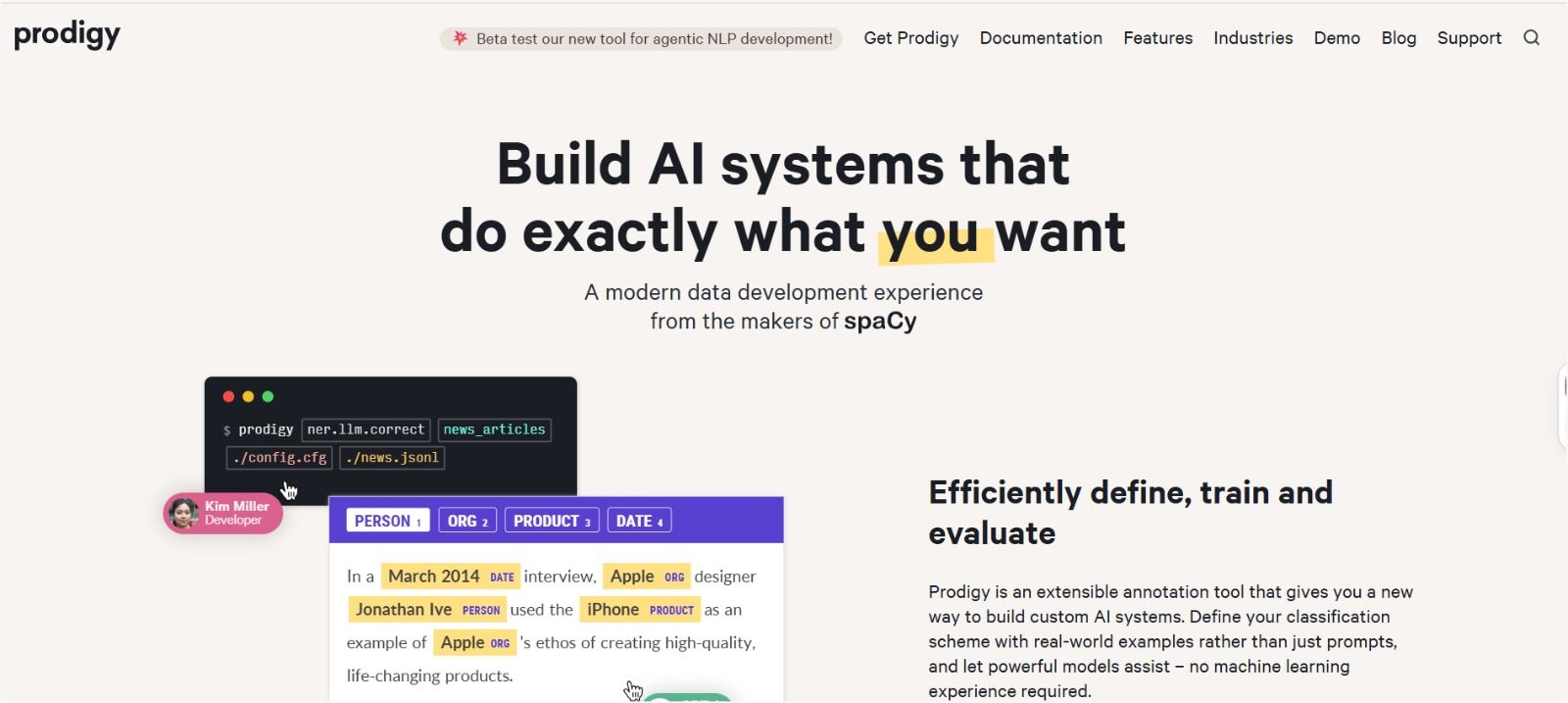
Prodigy is a developer-focused annotation tool designed mainly for machine learning and NLP workflows. It uses active learning to help teams label data efficiently.
Key features:
Text annotation
Named entity recognition
Active learning
Best for: NLP developers and data scientists.
17. Datasaur
Datasaur is a data annotation platform focused on NLP and language data. It provides tools for labeling and managing text datasets.
Key features:
Text annotation
NER and text classification
NLP workflow management
Best for: NLP and language AI projects.
18. Hive
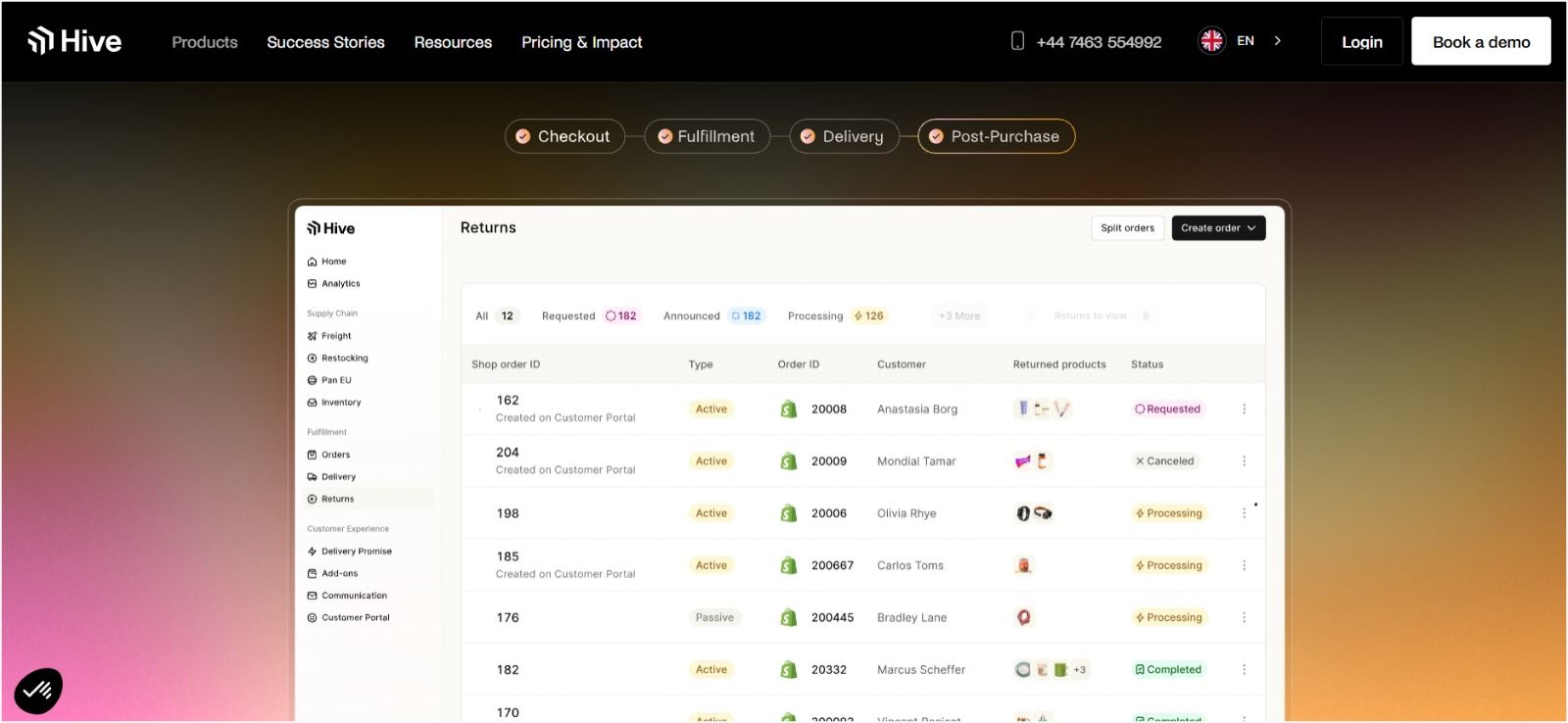
Hive provides AI data solutions for image, video, text, and content-related workflows. Its services combine data annotation with AI-powered analysis.
Key features:
Image and video data
Content analysis
Data annotation
Best for: AI companies and content platforms.
19. Ango Hub
Ango Hub is a flexible data annotation platform for AI and machine learning projects. It supports customizable workflows and quality control.
Key features:
Image and video annotation
Custom workflows
AI-assisted labeling and QA
Best for: AI startups and computer vision teams.
Data Labeling Tools vs. Data Labeling Services: What's the Difference?
A data labeling tool is software that helps your team create, review, and manage annotations.
A data labeling service adds people and operational support to that software. Rather than just providing an annotation interface, a service can offer trained annotators, project management, quality assurance, and workflow management.
For instance, your team could leverage CVAT, Labelbox, Dataloop, or any other platform and have a specialized data operations partner handle the day-to-day annotation activities.
This creates three common approaches:
1. In-house labeling
Your own team manages the tool, annotators, instructions, and QA process.
2. Outsourced labeling
A third-party provider manages the annotation work for you.
3. Hybrid labeling
You have your own team that deals with your project requirements and any tricky edge cases, and then you have an outside team that may be responsible for annotating a large number of projects and quality controlled production calls.
When can it be effective?
This can be particularly helpful for organizations with an existing platform of choice. The software will stay with the process, but trained individuals will perform the operational work.
Logictive Solutions follows this broader data operations approach, combining annotation technology with trained teams, quality assurance, project management, and scalable delivery. Its current AI data services cover image, video, text, audio, and NLP annotation.
How to Choose the Right Data Labeling Tool for Your Project
The best data labeling tool depends on your project rather than simply the number of features a platform offers.
Before choosing a tool, consider these questions:
1. What type of data are you labeling?
Start with your primary data type.
For example:
Images → CVAT, Roboflow, Supervisely
Video → V7, CVAT, Encord
Text/NLP → Label Studio, Prodigy, Datasaur
3D/LiDAR → Segments.ai, Encord, Supervisely
Medical imaging → V7, Encord, Supervisely
Multiple data types → SuperAnnotate, Labelbox, Kili, Encord
2. How large is your dataset?
A small research project may not need the same infrastructure as an enterprise project involving millions of files.
Look for:
Batch management
Cloud storage integrations
Automated labeling
Task distribution
Dataset management
Performance monitoring
3. Do you need AI-assisted labeling?
AI-based labeling can minimize repetitive tasks by starting with preliminary labels and verifying and refining them.
This can be particularly beneficial for storage management of large image and video sets.
But automation of labelling should not be a substitute for quality control. For tricky or low-quality examples, human validation might still be required.
4. Do you need human QA?
For many AI projects, labeling is only the beginning.
Ask whether the platform supports:
Reviewer workflows
Multiple review stages
Consensus labeling
Quality metrics
Error tracking
Annotation guidelines
Audit trails
5. Does your team need an open-source solution?
Open-source tools such as CVAT and Label Studio can provide greater control over deployment and customization.
However, self-hosting also means your team may need to manage infrastructure, security, updates, backups, and technical support.
6. What security requirements do you have?
If your dataset contains medical, financial, personal, or confidential business information, security should be considered before selecting a platform.
Check for:
Role-based access
Encryption
Audit logs
Data retention controls
Compliance certifications
Deployment options
7. Do you also need broader data operations?
Some projects involve more than annotation. You may also need data cleaning, data migration, validation, dataset management, or ongoing quality control.
In these cases, look beyond the labeling interface and consider the complete workflow around your training data.
When a Tool Alone Isn't Enough
A data labeling tool provides the technology needed to create and manage labels, but the tool does not automatically guarantee high-quality training data.
The final quality also depends on:
Clear annotation guidelines
Trained annotators
Domain knowledge
Consistent labeling standards
Quality assurance
Regular feedback
Review of difficult cases
Proper project management
This becomes more important as projects become larger or more specialized.
For example, medical imaging, insurance, financial, and autonomous-driving datasets may contain edge cases that require domain knowledge and careful human review.
This is where a data operations partner can add value.
Logictive Solutions combines annotation technology with trained teams, human-in-the-loop quality assurance, project management, and scalable delivery. The company currently works across computer vision, NLP, image, video, text, and audio annotation workflows.
The goal is not to replace the labeling tool. It is to make sure the tool is being used effectively and that the final dataset meets the project's quality requirements.
A data labeling service can become useful when you need additional annotation capacity, specialized expertise, ongoing QA, or faster project delivery.
Conclusion
The right data labeling tool depends on your project's data type, dataset size, technical requirements, security needs, and team structure.
Open-source platforms such as CVAT and Label Studio can work well for teams that want flexibility and control. Specialized platforms such as Segments.ai and Prodigy are useful for specific data types, while enterprise platforms such as SuperAnnotate, Labelbox, Encord, and Kili Technology provide broader workflow and data management capabilities.
But choosing the right software is only one part of building reliable AI training data. Strong annotation guidelines, trained teams, quality assurance, and consistent project management are equally important.
If your team needs help managing annotation at scale, Logictive Solutions provides AI data annotation and data operations services with human-in-the-loop quality assurance and scalable delivery. Learn more about our data annotation services and see how we may support your AI data workflow